Foundation Crack Repair in Bellevue

Typical cost in Bellevue

  • One crack, up to 10 feet$350 – $1,000+
  • Three to four cracks, each up to about 10 feet$1,200 – $3,500+
  • One wide or structural crack$900 – $2,500+

Before a crack in a Bellevue foundation, basement or stem wall is sealed, someone should know what it is doing. Bellevue Foundation Repair reads the crack first, then recommends sealing, monitoring or an engineer’s look. This page covers how cracks are read and how they are repaired.

Our work covers Bellevue and reaches Mercer Island and Newcastle. Homes built from 1980 on make up 53.3 percent of Bellevue’s housing. A wall crack in any of them is a question of shrinkage, settlement or water, and we sort out which before choosing a seal.

Request a free quote
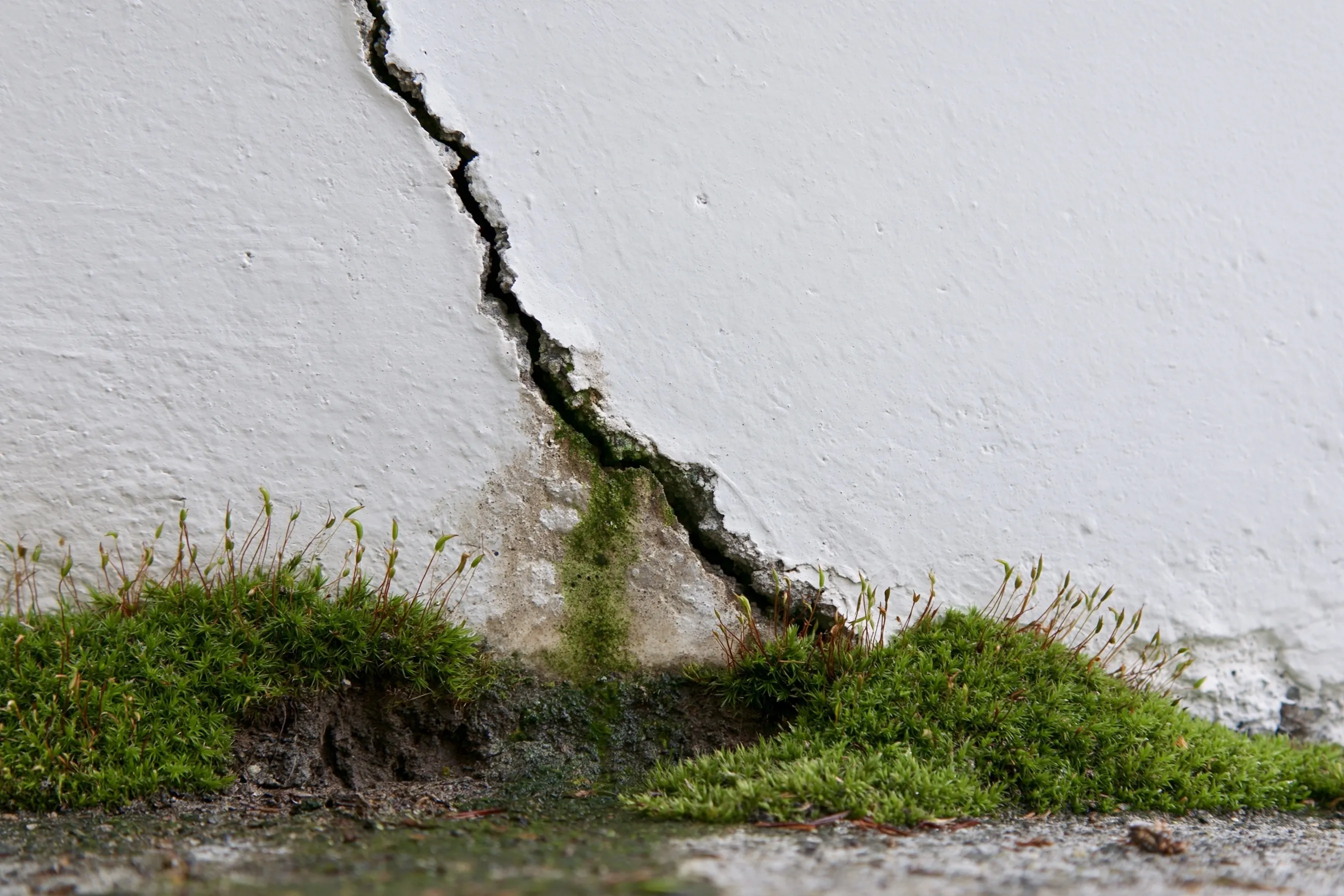
Diagonal crack in a painted concrete foundation wall, with moss at the soil line and a damp stain below the crack

Reading the crack

Fine straight cracks

A hairline that is thin, straight and unchanged is a candidate for sealing or watching. Shrinkage cracking, in HUD’s inspection guide, is rarely serious; the University of Minnesota extension adds that concrete and block foundations usually develop some cracks.

Tapering and stair-step cracks

Where a crack is wider at one end, HUD reads it as differential settlement, linked in its example to inadequate foundations or piers beneath a bay window, porch or addition. Stair-step cracking through block mortar is another pattern to have looked at. Either way the cause is found before the crack is sealed.

Horizontal and sweeping cracks

Horizontal cracks and long sweeping ones in block or brick are read differently. HUD lists backfill that was badly placed, heavy vehicles shaking the ground near the wall, and swollen saturated soil as candidates. Sealing the line does nothing about soil that is pushing; an engineer gets involved.

Cracks that leak

A crack that leaks is judged by the water. HUD says minor settlement cracks harm the structure only when moisture seeping through them damages the building over time, so the repair may lie on the drainage side as much as in the crack itself.

How a crack gets sealed

Two resins are used for injection: epoxy and polyurethane. The resin goes into the crack through small ports set along it and the surface is sealed with a bead; a surface sealer can also cover the face of a crack. Which one suits depends on what the crack is doing and whether water comes through.

HUD describes a waterproofing coating as something that bridges nonstructural cracks up to 1/16 inch and no wider. That is the coating’s limit, and it says nothing about whether a given crack is structural. A seal cannot stop a crack from moving, so a watertight result is never promised.

When to ask an engineer

If settlement may be behind a crack, HUD’s guidance is to put the question of cause to an engineer. Wide cracks, cracks still widening, horizontal or stair-step cracks and a crack beside a door that sticks are all cases for that. It is advice and not a Washington permit rule, and settlement and piering picks up where a settlement diagnosis leaves off.

We do not offer engineering; the engineer is someone you hire.

What changes the cost

A crack seal is priced by the length and condition of the crack and the side it is reached from. The factors:

  • The length of the crack and how many cracks there are
  • Whether it is reached from inside or outside, and whether soil must be dug away
  • Whether water comes through and what has to be done about it
  • An engineer’s evaluation of the cause
  • Finishes or shelving that must move to reach the wall

What Bellevue lots and rules add

Bellevue’s code requires a permit for repairs unless they are exempt, and ordinary repairs are exempt as long as they do not involve cutting away walls or removing or cutting structural beams or load-bearing supports. A crack seal may be ordinary; a wall repair that involves structural work may not be. The permit center decides, and we do not promise permit-free work.

An exemption never excuses work that breaks other codes, including the critical area rules on slopes, so a crack in a house near a mapped slope can still call for a conversation with the city.

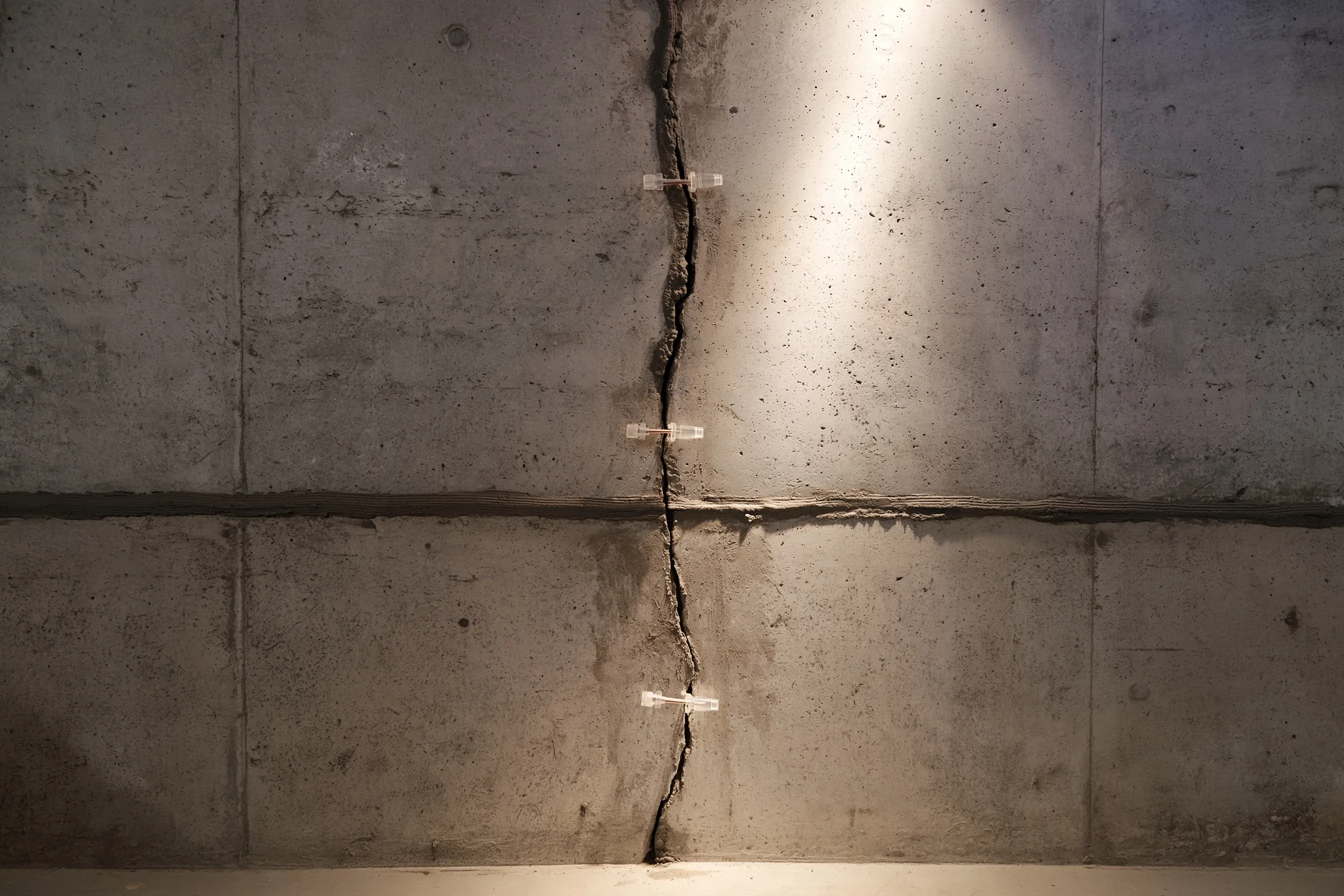
Vertical crack in an interior concrete wall sealed with a surface bead and small plastic injection ports spaced along it

Questions and answers

Is a crack in my foundation serious?

Usually not. Shrinkage cracks are rarely serious, according to HUD. The kind to show an engineer is a crack that tapers, runs horizontally or keeps growing.

Can a crack be repaired from the inside?

Both sides may be reachable, and injection goes through ports on the face of the crack. The side we choose follows access and what the crack is doing. If soil is pushing on the wall, sealing the crack does not address that.

Will sealing a crack stop it coming back?

No one can promise that. If the crack comes from movement, it can reopen. Marking the crack end with a dated pencil line shows whether it is moving.

Seepage through a crack is dealt with under foundation drainage. If instead the structure is moving, foundation settlement and piering is the better fit. For the rest of what Bellevue Foundation Repair does, use the Bellevue Foundation Repair home page.

Request a free foundation repair quote

Point us to the crack: which wall, roughly how long and wide, inside or out. Note whether it has changed, whether water gets through and the age of the house. We'll get back to you soon with an estimate or any questions we have. Estimates are free and there's no obligation.

Call (425) 696-3370

Call (425) 696-3370