Foundation Repair in Bellevue

At Bellevue Foundation Repair, we bring a decade of experience making foundation repair work quick and easy for homeowners and property managers alike. Our proven methods include reliable professionals, guaranteed work, and affordable pricing. Call now for a free, personalized quote, no obligation.

For us, every project is unique and we always focus on your home's needs and how to best repair its foundation. Scroll down to learn more about foundation repair and our unique approach.

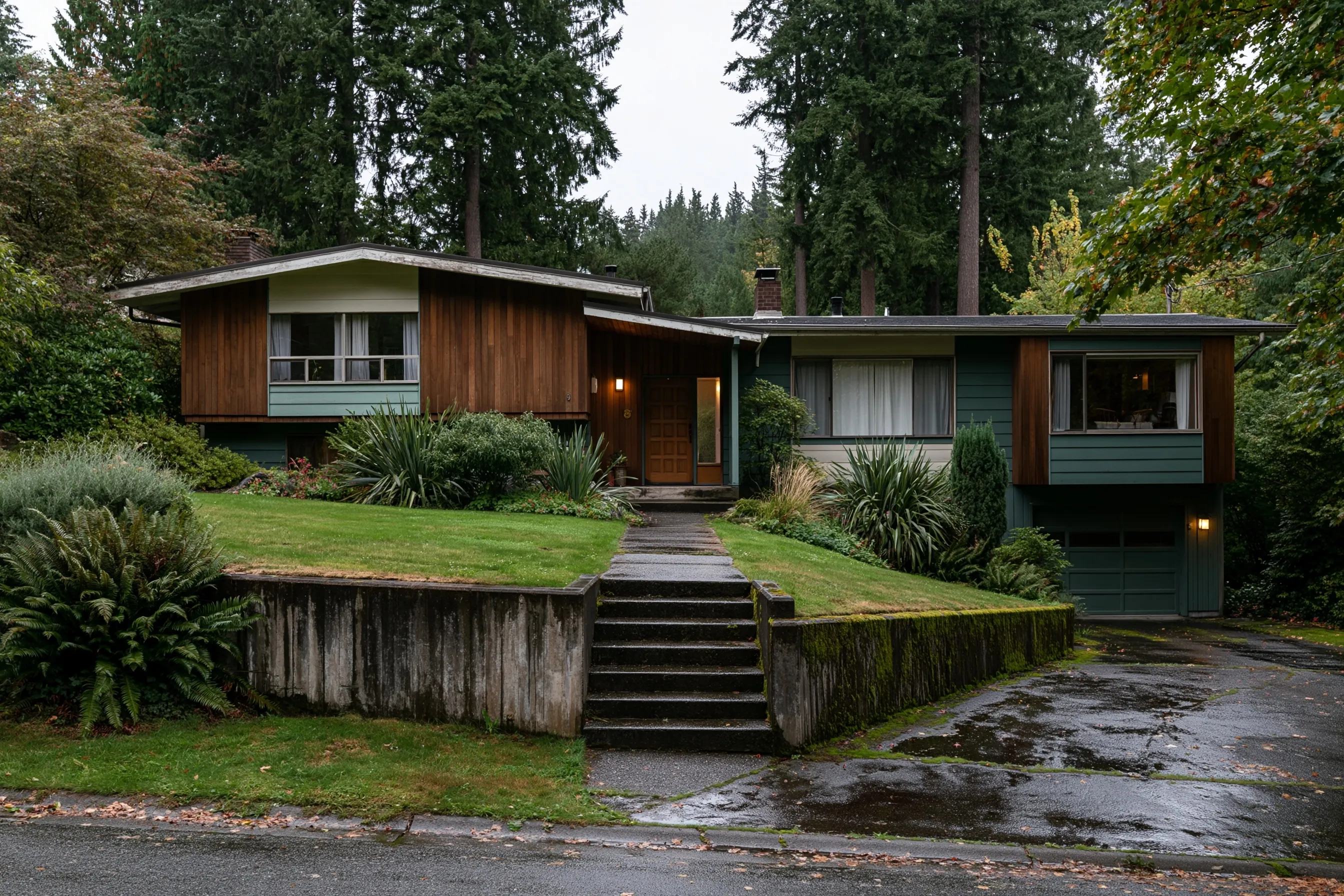
Split-level house on a sloped lot with low mossy retaining walls beside the entry steps, tall Douglas firs behind and a wet green lawn
Foundation settlement and pieringFoundation crack repairCrawlspace post and beam repairSeismic retrofit and foundation boltingFoundation drainage

Our foundation repair services

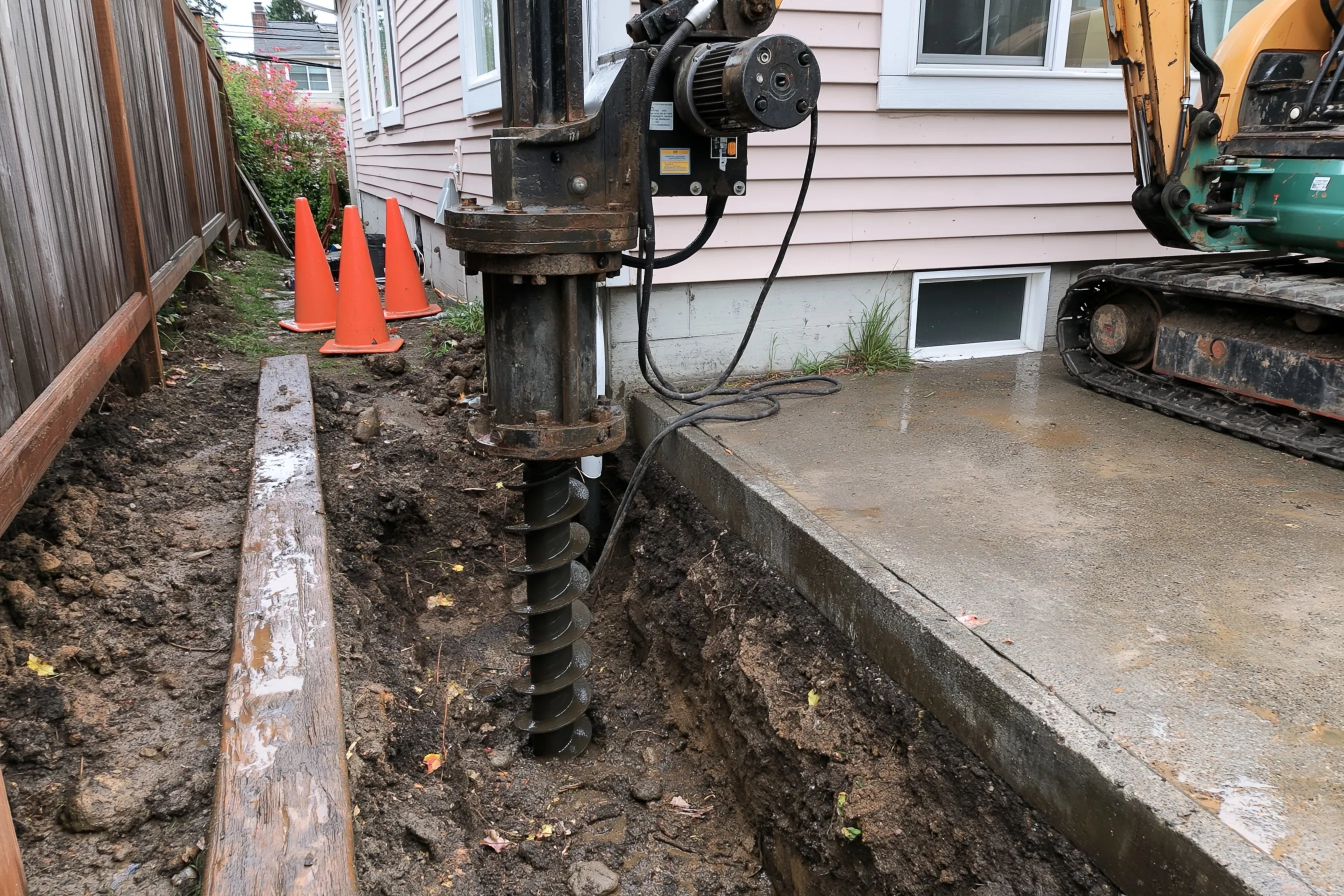
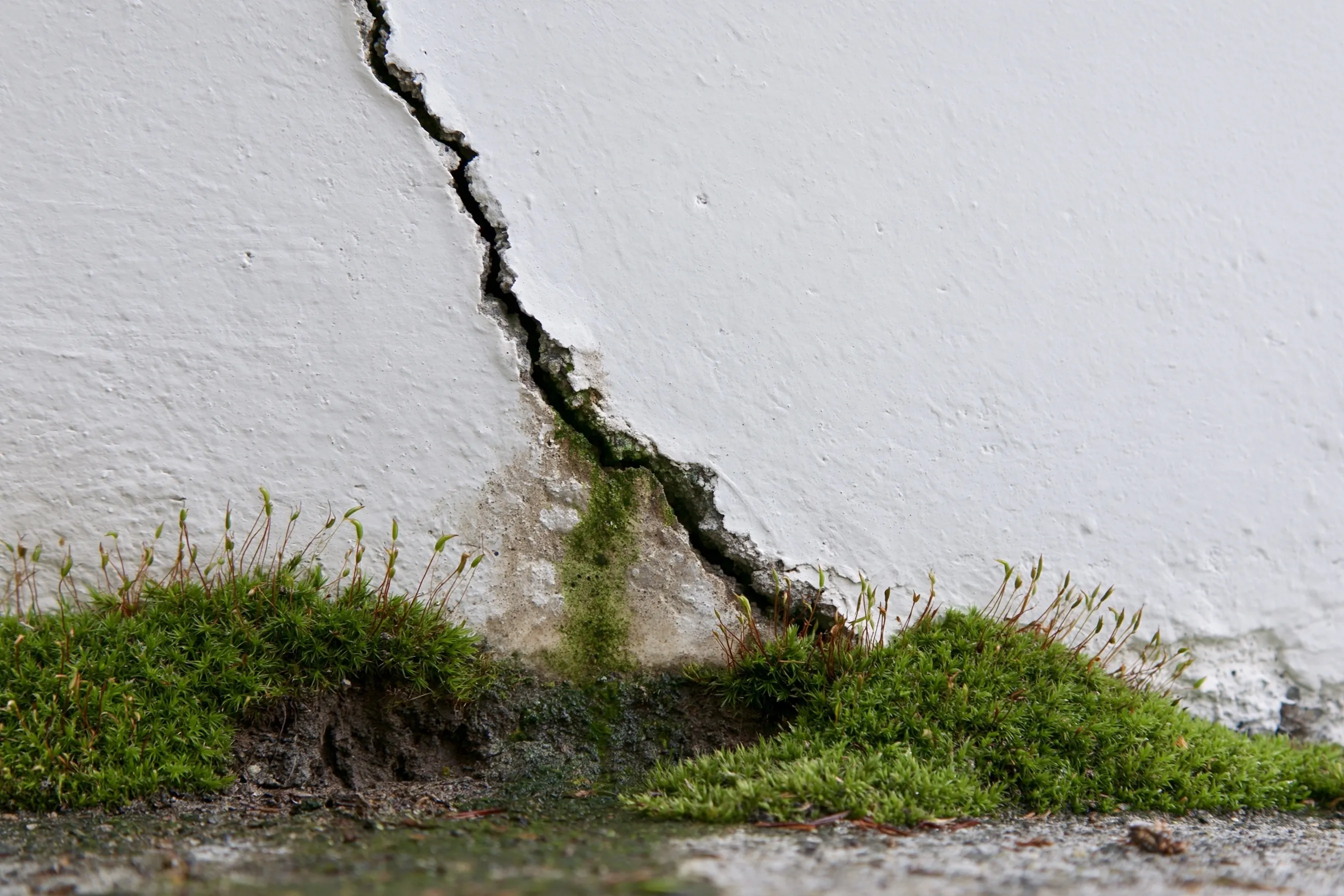
Drive head and torque motor on a small excavator turning a steel helical shaft into a narrow trench beside a house foundationDiagonal crack in a painted concrete foundation wall, with moss at the soil line and a damp stain below the crack

Foundation settlement and piering

A house that has sunk or tilted shows it in floors that run downhill, doors that no longer close square and cracks that open wider at one end. First we work out why the footing or the soil under it is moving. Depending on the answer, we may drive or screw steel piers down to firmer ground, or enlarge the footing to an engineer’s design. Piers are there to stop the movement. Getting a house back to level is a separate question, and it depends on the house.

Foundation crack repair

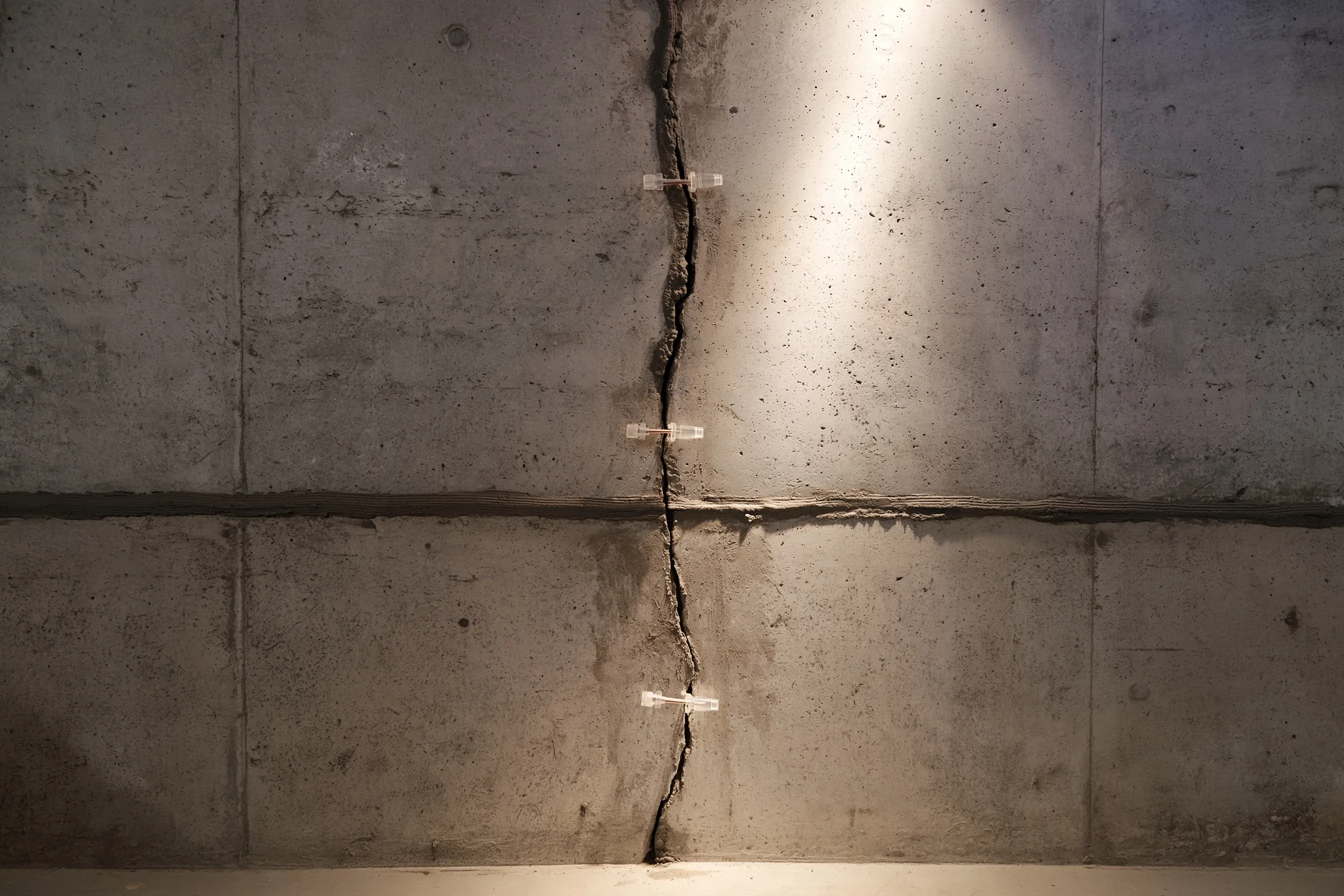
A crack in a foundation wall can be a shrinkage line that never changes or a sign of movement behind it. The shape of the crack, what is around it and whether water comes through tell us which. From there we either inject or seal the crack, or we suggest an engineer look first.

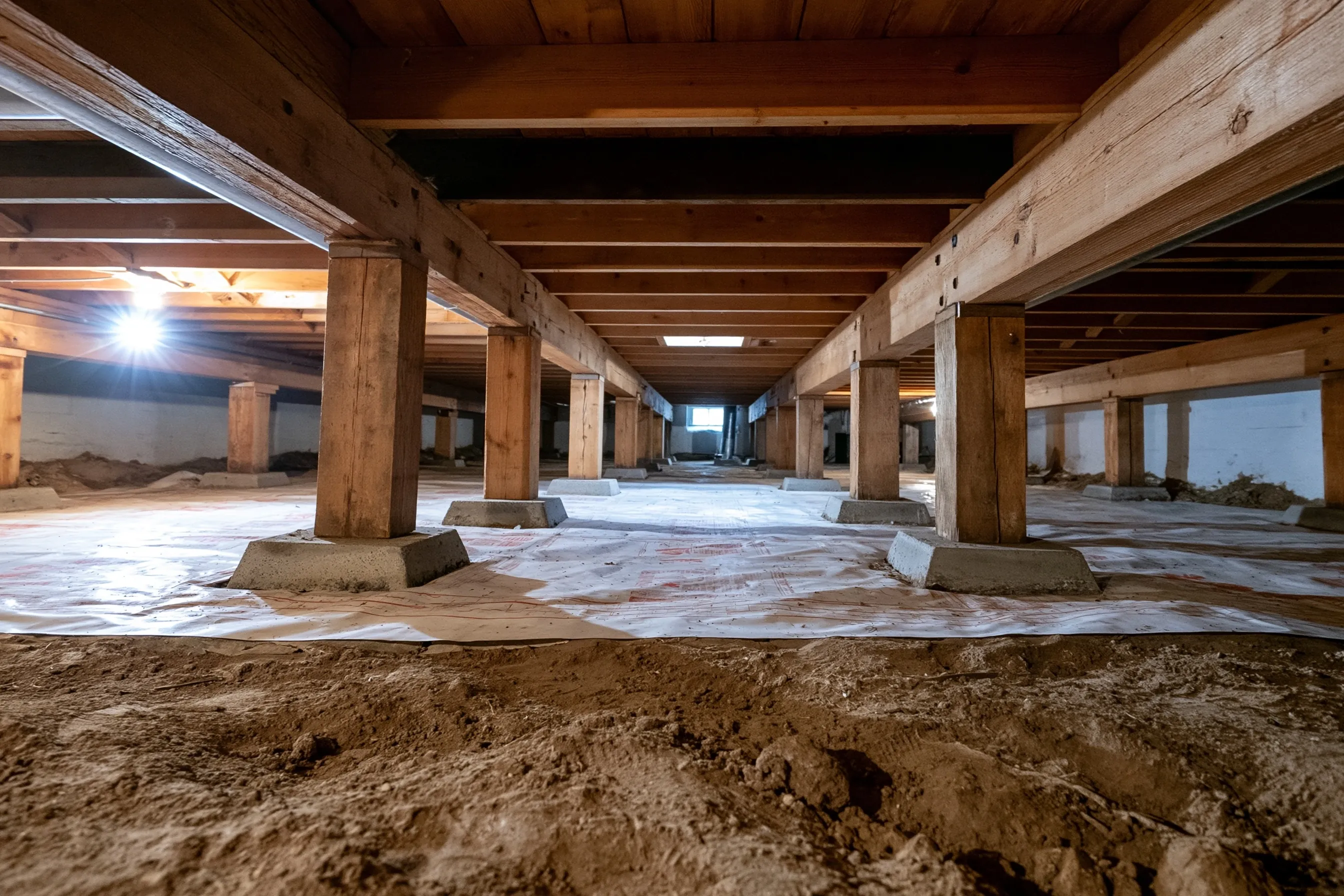
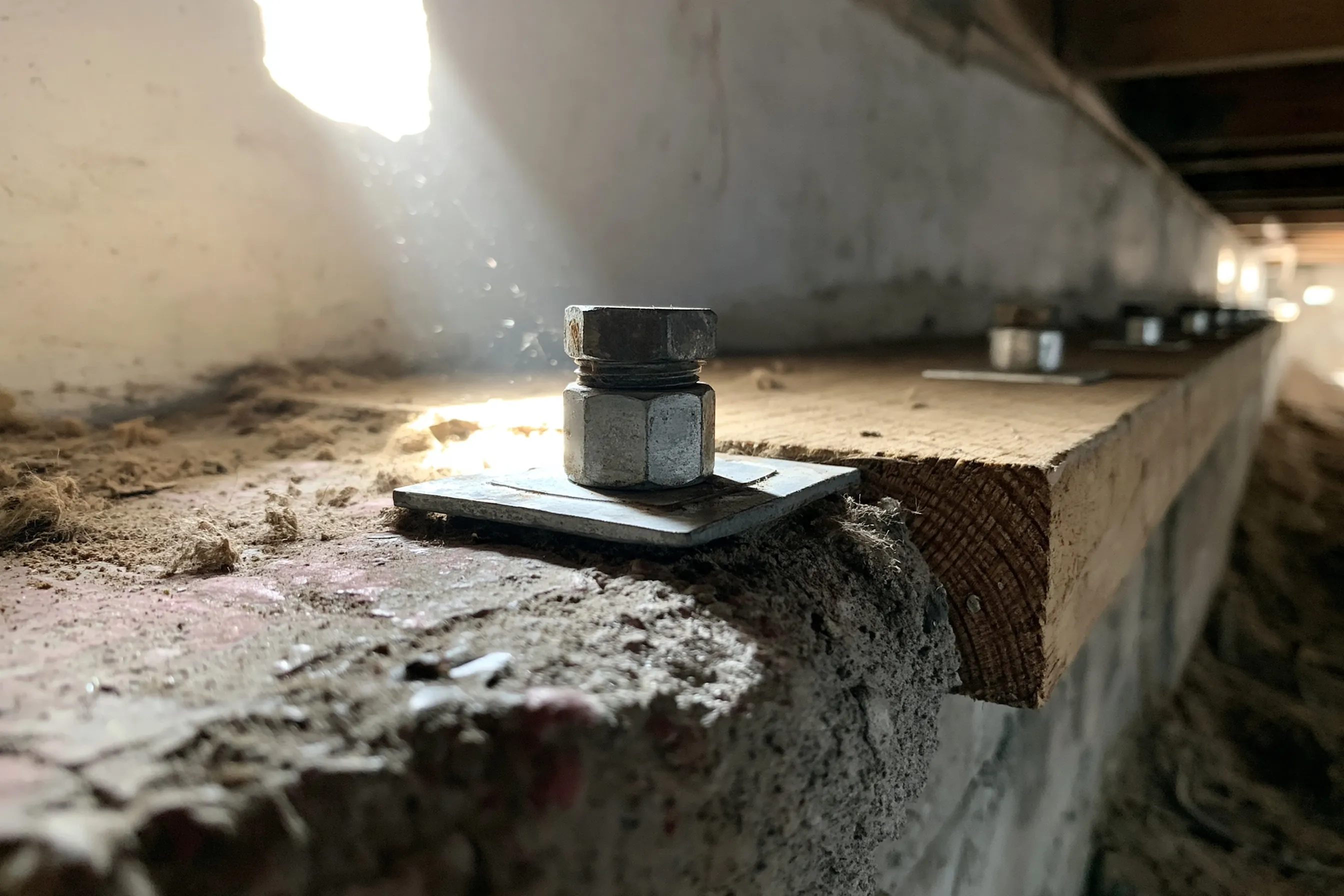
Low view inside a crawlspace of timber posts on concrete pads holding wood girders and joists, with a vapor barrier partly covering the soilSteel anchor bolt with a square plate washer fastening the wood sill plate to a concrete stem wall in a crawlspace

Crawlspace post and beam repair

A floor that bounces or sags over a crawlspace points to the posts, pads, girders and sill plate under it. We replace or re-support whatever has failed. We also deal with the damp that rots wood, or the new framing would face the same conditions.

Seismic retrofit and foundation bolting

In an earthquake, a house that is not tied down can slide off its foundation as the short walls under the floor fold over. We bolt the sill plate to the foundation and brace the cripple walls with plywood. This helps hold the house in place. It does not make a house earthquake-proof.

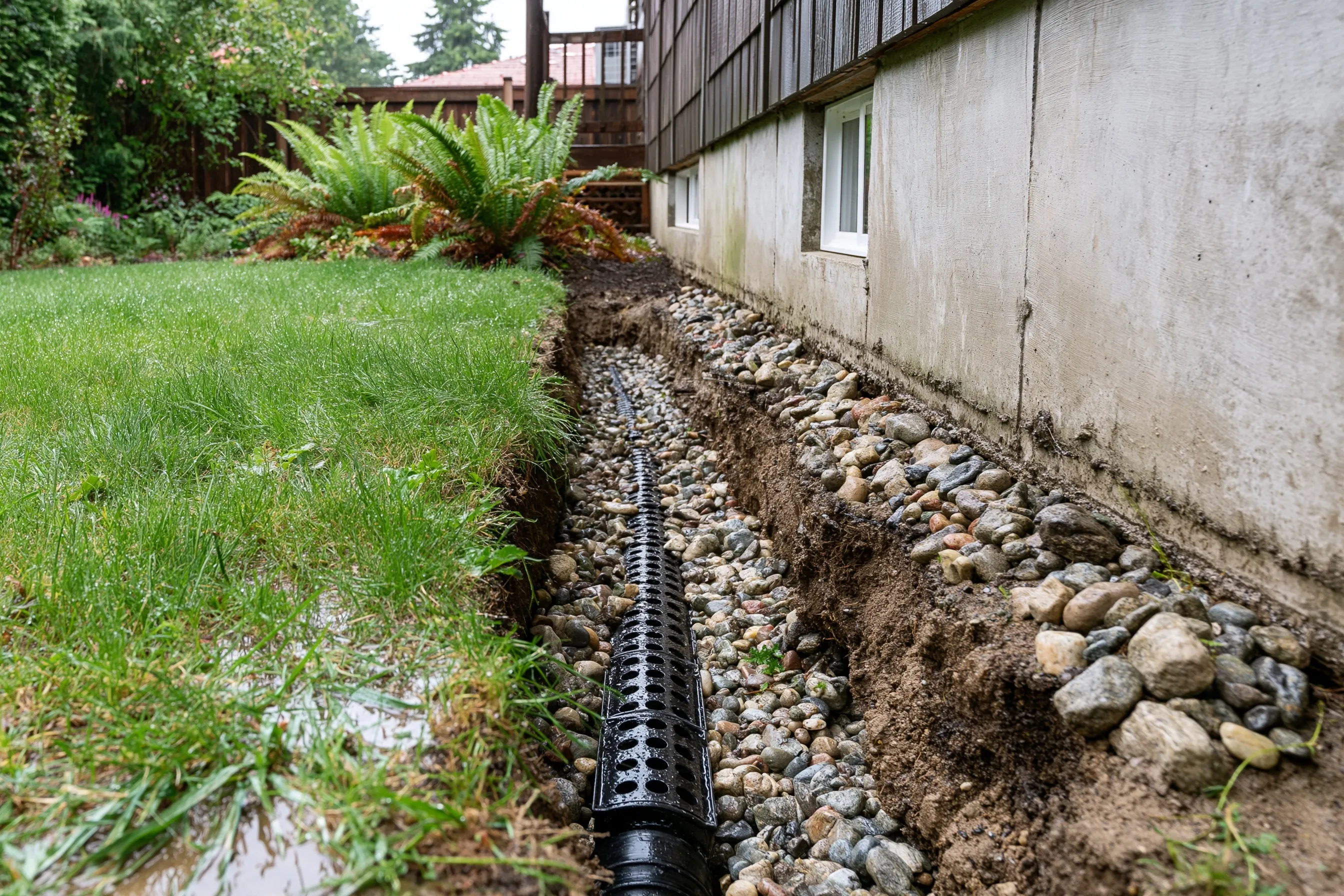
Narrow trench along the outside of a concrete foundation wall with a perforated drain pipe laid in washed gravel at footing level

Foundation drainage

Water standing against a footing, a wet crawlspace or soil washing out from under a wall can move a foundation. We look at the gutters and downspouts, the grade around the house and the footing drains, inside or out, together. Fixing one without the others can just send the water somewhere else.

Foundation repair costs

These ranges cover hired labor and materials for foundation work on houses in Bellevue, Mercer Island and Newcastle. A plain job with easy access sits at the low end, and anything with tight access, deeper digging or hidden damage moves toward the top of the range.

Settlement and piers

  • Per pier$1,800 – $3,500+
  • One corner of the house, 3 to 4 piers$5,500 – $14,000+
  • One side of the house, 6 to 8 piers$11,000 – $28,000+
  • Whole house, 10 to 14 piers$18,000 – $49,000+
What is included

Steel piers are driven or screwed down to firmer soil and the footing is carried on them. The count and depth come from a written plan drawn after the house has been looked at, and any engineer’s design or permit is settled first.

Get a free quoteSee an example project

Foundation crack repair

  • One crack, up to 10 feet$350 – $1,000+
  • Three to four cracks, each up to about 10 feet$1,200 – $3,500+
  • One wide or structural crack$900 – $2,500+
What is included

The crack is looked at to see what it is doing, then sealed from the inside with epoxy or polyurethane injection where that suits it. A crack that is wide or still moving is looked at more closely before anything is sealed.

Get a free quoteSee an example project

Crawlspace posts and beams

  • Replace one post$350 – $850+
  • Three to five posts$1,800 – $5,500+
  • New beam and posts under one room$3,000 – $9,000+
What is included

Rotted or sagging posts, pads and girders under the floor are replaced or supported on new footings. Damp and drainage under the floor are checked at the same visit.

Get a free quoteSee an example project

Seismic bolting and bracing

  • Bolting and bracing, house about 1,200 sq ft$4,500 – $10,500+
  • Bolting and bracing, house about 2,000 sq ft$7,500 – $17,500+
  • Bolting and bracing, house about 3,000 sq ft$11,000 – $26,000+
What is included

The house is bolted to its foundation and short crawlspace walls are braced with plywood. This is meant to help keep the house on its foundation in an earthquake; it does not make a house earthquake-proof. It is done from the crawlspace and may need a permit.

Get a free quoteSee an example project

Foundation drainage

  • Inside drain along one wall, about 30 ft, no sump pump$1,500 – $3,800+
  • Inside drain around the whole perimeter, with a sump pump$7,000 – $18,000+
  • Outside footing drain, one side about 30 ft$3,000 – $4,000+
  • Outside footing drain, whole perimeter$12,000 – $16,000+
What is included

Water is collected at the footing, outside in the ground or inside in a channel, and sent to a sump or a safe outlet. The right choice depends on where the water is getting in.

Get a free quoteSee an example project

Ranges are 2026 estimates, not quotes. Call today for a free, personalized quote.

Signs your foundation needs a look

Any single sign may be harmless. Shrinkage cracks are rarely serious, and a minor settlement crack harms a building only when moisture keeps leaking through it. What matters is whether anything changes.

  • Cracks in a foundation wall that taper, run in steps through block joints or run sideways
  • Doors and windows that stick or have started to leave a gap
  • A floor that slopes, or bounces underfoot
  • Gaps between the wall and the floor, or between a porch or addition and the house
  • Damp, mold or soft, dark wood in the crawlspace
  • Water standing along the foundation after rain

Write down where each sign is and take dated photos with a level or tape in the frame. Mark the end of a crack with a pencil and date it. If the mark has not moved when we visit, that is good to know. If it has, that tells us even more.

When an engineer is involved

When the problem is settlement, we want a structural or geotechnical engineer who does this kind of work to name the cause first, and we do the repair under that engineer’s direction. That is why cause comes before method with us.

We do not offer engineering. If your job needs an engineer’s report or stamped drawings, you hire the engineer, and the city’s permit staff can tell you whether your repair needs one. Washington registers engineers under a separate law from contractors.

Foundation repair in Bellevue homes

Bellevue’s homes went up in waves, and the age of a house tells us where to look first. A house from the 1960s or 1970s may have a crawlspace with timber posts and a sill that was never bolted down. That is crawlspace and seismic work.

A house from the 1980s or later is more likely to have a poured foundation wall, where the questions are cracks and drainage. That is only a tendency. The house itself tells us what it has.

When the lot is a critical area

Some Bellevue lots fall under extra rules called critical areas, and a foundation job on one of them can need studies or approvals before anyone chooses a pier. The city’s code names four kinds of hazard area: landslide hazards, steep slopes, seismic hazards and coal mine hazards.

  • Landslide hazards are slopes of 15 percent or more with more than 10 feet of rise that also show certain features, such as past failures or seeps.
  • Steep slopes are slopes of 40 percent or more with at least 10 feet of rise and more than 1,000 square feet of area.
  • Seismic hazards include known faults and areas the Department of Natural Resources maps as moderate-to-high or high liquefaction susceptibility.
  • Coal mine hazards are the areas on the city’s coal mine maps.

Landslide and steep-slope areas carry a buffer measured from the top of the slope, and the code sets it at 50 feet. A house that was legally in place before August 2006 and already sits inside the buffer is exempt from it. The code treats additions and repairs separately, so ask the city before you assume.

Being exempt from a permit does not get a job out of the critical area rules. The city can tell you whether your lot is inside a mapped area. The state’s geology portal and King County’s landslide map are good places to look first.

Our process

01

Look at the house

First we hear what you noticed and where. Then we walk around the outside, go through the crawlspace or basement and across the rooms above, and take in the lot’s slope, the paths water takes and what sits against the footing.

02

Find the cause

Cracks, sloping floors and rot are signs. The cause is soil, water, old framing or a missing connection. If we cannot tell which, we say so, and an engineer’s evaluation comes before any pier.

03

Plan the repair

We choose a repair to fit the cause and settle the permit question and any critical area check first. You get a written plan that says what the work covers and what it does not.

04

Do the work

We work to the plan and to the engineer’s design where there is one. If we find something on the way that changes the plan, we bring it to you before we go ahead.

05

Clean up and hand over

We backfill the trenches, take the debris with us and walk you through the finished work. Then we check the crack you marked or the floor you measured against what we noted at the start.

Permits for foundation repair in Bellevue

In Bellevue, repairing a building or structure needs a permit unless the work is exempt. Ordinary repairs are exempt. Cutting away walls, or cutting or removing a structural beam or load-bearing support, is not ordinary. The city’s permit staff decide whether a crack repair, a set of piers or a replaced post counts as ordinary, and we find that out before we start.

Washington contractors register with Labor and Industries. That is a license, not a building permit and not an approval of the work.

What changes the cost

Each service has a price range to start from. We visit first, then give you a written estimate. What moves the price:

  • What is causing the problem, which decides the method
  • How deep firm soil lies and how many piers or posts the load needs
  • Access: slope, fences, landscaping and the height of the crawlspace
  • Engineering reports, a critical area review or a permit
  • How much finish has to come off and go back, inside or out
  • Water control that has to be done first or alongside

Service area

We work in Bellevue first, and in Mercer Island and Newcastle, each about 6 road miles away. Hillsides, housing and city rules differ in each. Ask about other addresses nearby.

Frequently asked questions

How much does foundation repair cost?

Every service has a range to start from, and the cause and method change the scale: sealing a hairline crack, replacing crawlspace posts and setting piers are not the same job. After a visit you get a written estimate.

Is a crack in my foundation serious?

Not necessarily. A plain shrinkage crack is rarely serious. Cracks that taper, run sideways or keep widening deserve a check, and an engineer may be the right first call.

Do you repair a crack from the inside or the outside?

It depends on what the crack is doing and which side we can reach. The method follows the cause. With a moving crack, we need to understand the movement first, whichever side we seal.

Is there a best time of year?

Water problems are easier to read after rain, when a visit can show where the water goes. Settlement usually happens over time, but a leaning wall or active slope movement is urgent.

Can I stay in the house during the work?

Once we have seen the foundation, we can tell you what the work involves and whether you can stay.

Does insurance pay for foundation repair?

Your policy and the cause decide that, so ask your insurer before work begins. We don’t give insurance advice.

Is it worth fixing?

That depends on what the foundation is doing. A line that has not moved may only need watching. A foundation that keeps moving, or water that keeps coming, is a reason to find the cause. We would rather you hear that after a look at the house than from a sales pitch.

Request a free foundation repair quote

We recommend calling, but do feel free to contact us using this form. We'll get back to you with a free, personalized quote or additional questions as soon as possible. We're here to help.

Call (425) 696-3370

Call (425) 696-3370