Crawlspace Post and Beam Repair in Bellevue

Typical cost in Bellevue

  • Replace one post$350 – $850+
  • Three to five posts$1,800 – $5,500+
  • New beam and posts under one room$3,000 – $9,000+

A floor that bounces, sags or goes soft over a crawlspace can be traced to what is under it: a rotted post, a shifted pad, a split girder, a damp sill plate. Bellevue Foundation Repair replaces and re-supports those parts, and deals with the moisture that attacked them so the new wood is not set into the same conditions.

Our work covers Bellevue and reaches Mercer Island and Newcastle. Bellevue’s median house dates from 1982, and 34.3 percent of the city’s homes went up between 1960 and 1979, so timber-framed floors over crawlspaces fall within the work. What a given house has can only be seen from under it.

Request a free quote
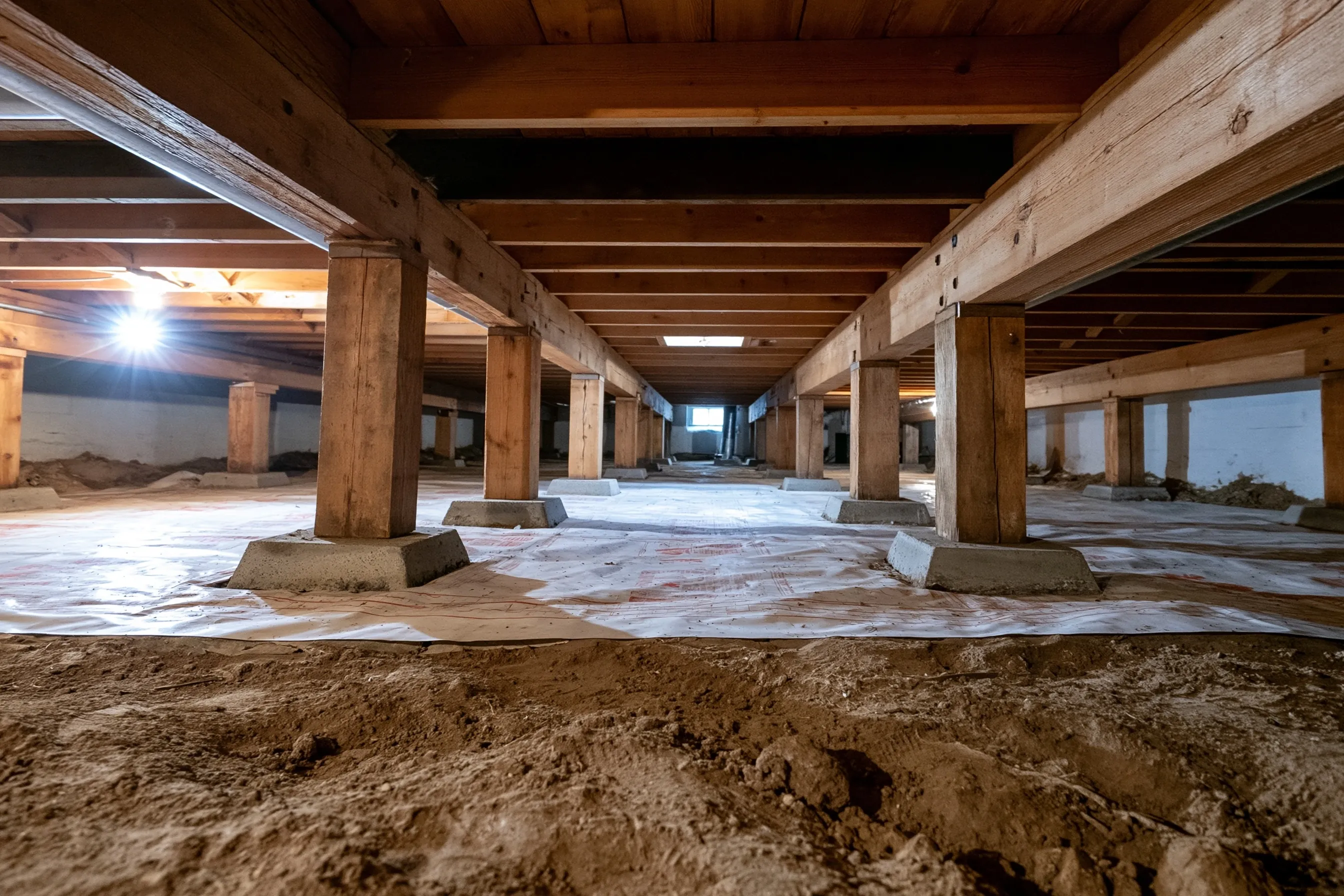
Low view inside a crawlspace of timber posts on concrete pads holding wood girders and joists, with a vapor barrier partly covering the soil

What holds the floor up

Posts and pads

Short posts carry the floor load down to concrete pads or pier blocks on the ground. A post that has rotted, shifted or sunk into soft soil lets the floor above it drop. The repair is a new post on a new pad, set so the load is carried evenly.

Girders and joists

Girders are the beams that span from post to post, with the floor joists resting on or hung from them. A girder that sags or has cracked, or joists that have been cut for plumbing, show up above as a floor that bounces. Beam repair can mean a new beam or an added support.

Sill plate and rim joist

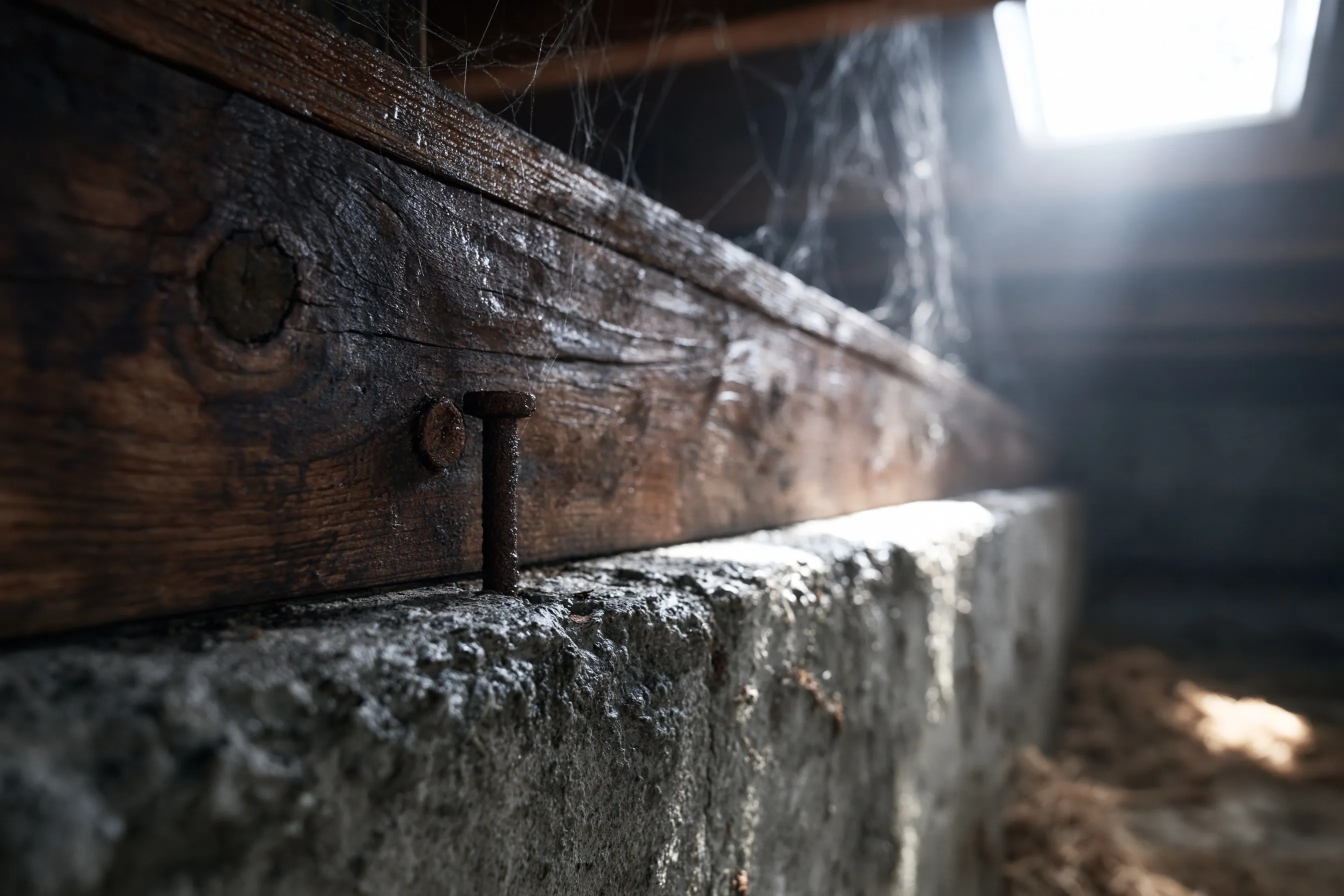
Everything above the foundation wall rests on the sill plate. The Forest Service decay manual links lasting dampness to the fungi that weaken wood, so a sill that stays wet is a candidate for rot. Rotted wood comes out, and the cause of the dampness gets fixed first.

Ground cover and moisture

Building America guidance calls for heavy polyethylene sheeting sealed to the walls and piers whether a crawlspace is vented or not. The ground cover here is part of keeping the new wood dry.

Floors that sag or bounce

From above, a post problem shows as a floor that is soft in one place, slopes toward a room corner or squeaks where it used to be firm. From below, a lit crawlspace shows leaning posts, gaps between a girder and a post and wood that is dark and soft when pressed with a screwdriver.

A sloping floor is not always a crawlspace problem. The same sign can come from a foundation that has settled, which is why the settlement and piering page lists what to look for.

Moisture under the house

In a vented crawlspace, Building America puts bulk water first among moisture sources. It gets in through poor grading, perimeter drainage that was never installed, or gutters and downspouts that fail. A sheet over the soil will not hold that water back, so we trace its route before anything else.

Wet ground is a job of its own. See foundation drainage for what we look at outside the house and under it.

Working in a low crawlspace

Crawlspace work is done lying down, in small spaces. Clearance, access hatches and what lies between the hatch and the work shape the job. Floors are supported with jacks in small steps while the old post or beam comes out, and any lift is held to the amount the framing will accept.

We do not promise that a floor will come back level, and we say in the written scope what a repair is meant to do.

What changes the cost

Crawlspace work is priced from what is wrong and how hard it is to reach. The factors:

  • How many posts, pads or beams need work
  • The height of the crawlspace and the length of the crawl to the work
  • Whether sill plate or rim joist wood has decayed
  • Water that has to be controlled first
  • Whether the floor must be jacked and what sits on it

What Bellevue lots and rules add

Swapping a post or a beam is structural work. Bellevue’s exemption for ordinary repairs stops short of cutting or removing a structural beam or load-bearing support, so a permit may be needed; the city’s permit staff can say whether yours does.

On a sloped lot, ask the city about the critical area rules before work, since an exemption from one code does not exempt work from the others.

Dark, damp sill plate and rim joist at the top of a concrete stem wall in a crawlspace, with a rusted anchor bolt

Questions and answers

Why does my floor bounce over the crawlspace?

The posts, girders or joists under that spot may have failed, or the floor may be spanning too far. The cause is read from under the floor, with a look at the posts and the wood.

Do rotted sill plates need replacing?

Wood kept damp becomes infected with decay fungi, so a soft sill is a sign of damp as well as a framing problem. What gets replaced depends on how far decay has gone, and the cause of the damp has to be fixed too.

Is this the same as crawlspace encapsulation?

No. We repair the structure under the floor. A sealed ground cover is part of keeping a crawlspace dry, and drainage is covered on its own page.

Sill decay can go with a house that is not bolted down either, a topic for seismic retrofit and foundation bolting; the Bellevue Foundation Repair home page lists the rest of our work.

Request a free foundation repair quote

How old is the house, how high is the crawlspace and where is the floor soft or sloping? Tell us if you have seen damp, mold or soft wood, and whether there is an access hatch. We'll get back to you soon with an estimate or any questions we have. Estimates are free and there's no obligation.

Call (425) 696-3370

Call (425) 696-3370